

Predicting the future of your e-commerce? With Google you can.
Google Analytics last July announced the introduction of two new predictive metrics. By monitoring the actions that users perform on the app or website, you can have new information useful for creating targeted sponsorships to engage your audience.
This feature predicts future events by studying the data recorded in the past using machine learning. It actually creates a statistical model to analyze user data and define with a high degree of probability their future behaviors, such as cart abandonment or the propensity to buy.
By combining this information with the data analysis carried out by Google Ads machine learning, Analytics can predict future actions on your e-commerce by simplifying budget management and the choice of the different tags of your ads.
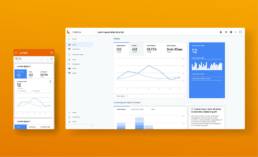
Purchase probability
The likelihood that a user who has been active in the past 28 days will log a specific conversion event in the next seven days. Currently only purchase / ecommerce_purchase and in_app_purchase events are supported.
Churn Probability
The likelihood that a user who was active on your app or site in the past seven days will not be active in the next seven days.
Check list to start!
Both metrics are generated based on data collected in the previous 28 days and Analytics requires:
- A minimum number of positive and negative examples relating to buyers or users who have left the site. For the model to be eligible, 1000 users must have the relevant predictive condition turned on and 1000 users must not have.
- For the model to be eligible, the quality of the model must be sustained over a period of time.
- To be eligible for both likelihood of purchase and likelihood of abandonment, a property must send purchase and / or in_app_purchase events (which are collected automatically).
Predictive metrics for each eligible model will be generated for each active user once per day. If the model quality for your property is below the minimum threshold, Analytics will stop updating corresponding predictions that may no longer be available in Analytics.
At work!
By creating new personalized audiences, it is possible to create more effective remarketing ads to lead the user towards the final conversion or to re-engage all those people who had shown interest in our products, but are now no longer active on ours. site or app.
You could also analyze this data to distribute the budget in the campaigns in an optimized way, improving the management of the amount spent.
Finally, by studying Google Analytics, you could identify which campaign allowed you to reach the audience with the highest probability of conversion using the user lifetime technique.
Related post

January Digital News
2026 kicks off with new developments in the digital landscape. Social platforms…

December Digital News
We wrap up the year with the digital news of December 2025: increasingly…

November Digital News
From advanced features for creators to new AI solutions, security tools, and…