

How SEO changes
Everything you need to know to improve your online ranking
“The best place to hide a dead body is the second page of Google results” – anonymous
Is SEO really dead as so many claim?
The answer is not that easy.
If initially this discipline had a purely technical character, today an approach based only on the improvement of specific elements of the source code is no longer sufficient.
That is, it is not enough to have a title, descriptions and keywords entered and optimized to be able to scale the SERP (ie the list of results that the search engine shows in response to what the user types).Over the years, SEO has taken on more and more a psychological connotation, which is why today we talk about Search Experience Optimization.
The positioning is in fact determined by various aspects that in some cases are partly beyond our control.
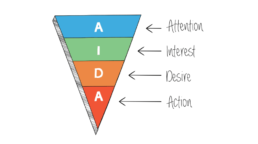
In fact, any choice by the user passes through some online moments which, for all marketing lovers, have been summarized in “The Aida Model”.
Each person before buying a product, contacting a company or choosing a service, in fact, inquires online, asks for opinions, makes comparisons and then finally gets to the action.Already since 2011, with Panda, Google has been aiming to reduce poor quality rankings, through a machine learning system. The famous search engine algorithm classifies the results by comparing relevance but also and above all interest. For example, it proposes in a higher position websites that have been clicked by people who are connected to you through social networks, first shows activities that are close to the area in which you are doing the search, that is, tries to constantly increase the value of the proposed result .
Keywords
If you are in the industry or have already learned about this topic, you may have felt that keywords are no longer needed.
Google has been penalizing these meta tags for some time because, it is useless to mince words, many companies have used them improperly. Other search engines (such as Bing for example) continue to use them to improve the relevance of the results.
To-do
Select no more than 2 keywords to identify your business or product.
Around these, define a maximum of 10 secondary keywords.
If you don’t know where to start, we recommend that you try these tools:
- majestic.com
- answerthepublic.com
- Google Adwords Keyword Planner Tool
Through the Google Search Concole you can also analyze the keywords that bring users to your site and you have the ability to calculate the CTR (Click-Through Rate) for each search query, also displaying the position for our keywords in the SERP.
Secret tips
Google yourself. Check which options the search engine returns with auto-complete.
For example, it often happens to find terms such as “reviews” or “opinions” as a suggestion following the name of a brand. This can help you to build, for example, an in-depth study on your site on this topic, useful to reassure users.
If you want to understand how many competitor keywords you have, you can use Google’s allintitle function.
Type this command in the search bar followed by the keyword – eg. allintitle: “organic coffee”.
You will be able to find out how many competitors are using your same terms to position themselves.

La SERP
Since 2011, many search engines, including Google, have introduced Shema.org
In short, it is a system through which to make the nature of the information contained on your site clearer.
We can in fact create a Reach Snippet or a result in the engine that consists of text, but also images, rates and other elements.
But that’s not all! For mobile, Google has created “special” results Rich cards that show the title, text, image and rate of the result.
Secret Tips
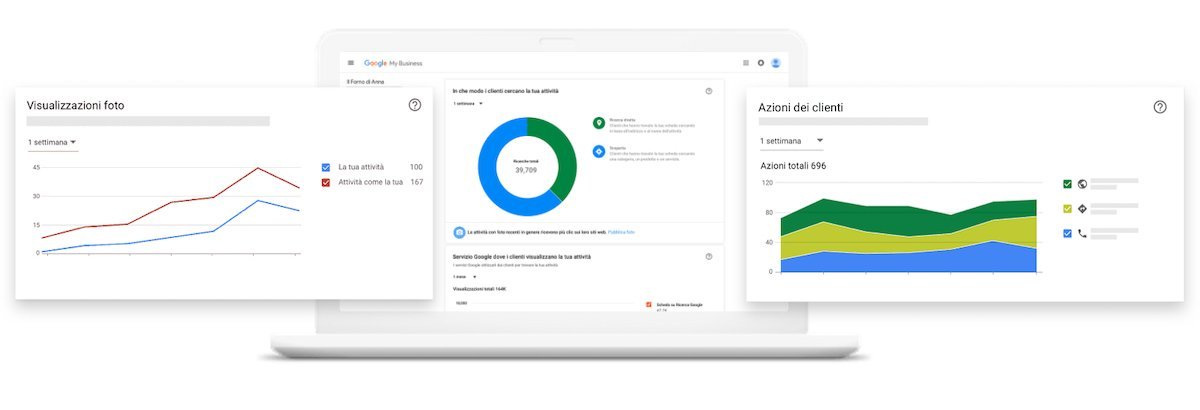
Since 2012, Google has activated a Knowledge Graph card that contains precise information about your business such as your address, telephone number and opening hours.
Remember that 92% of users willing to buy are looking for local information!
So… How to do it? Log in to Google My Business with your Google account.
After a check to ensure ownership and location of the company, you can create or modify your card by adding lots of useful information.
Il mobile
Mobile phones are now part of our daily life and this has also had repercussions on SEO. Since May 2015, mobile searches have overtaken desktop searches and you have to keep in mind why
now the research is now made up of micro-moments.
The user searches more often, in more moments and asks to be able to view results quickly and then interrupt the connection just as quickly.
This is why Google rewards sites through a “mobile-friendliness” ranking.
To-do
Remember that on mobile the space dedicated to search results are limited.
In most cases you will be shown 3 sponsored and 1 organic results.
So if you want to be competitive, you need to promote your product or event, you need to budget for Google ADS that can help you reach your audience.
Secret Tips
If you have a news site, blog, or frequently published content, you may want to consider using Accelerated Mobile Pages (AMP). These are web pages with a certain code structure, whose loading time is limited.
If you use this protocol you will see your results in the top positions. For more information, you can visit the website www.ampproject.org
Google Home, Alexa and vocal assistants
Recently Google and Amazon have launched a particular tech accessory. You may have heard of Google Home and Alexa. They are essentially turrets ready to perform certain actions upon receiving a command.
If you have used the voice assistant of your smartphone, consider that these objects have a very similar functioning.
I can do research, send orders, give useful information such as traffic or weather, let you listen to music, start calls or send messages.
And what happens to SEO?
Simple! PASO (Personal Assistant Search Optimization) arrives, a great opportunity, but also a great threat. The voice response is therefore only one, either our site is so optimized as to be the information chosen by the voice assistant, or we remain hidden. The user also does not have the possibility of choosing information, clicks and links.
N.B. Few people know that the iOS voice assistant uses Bing. For this reason, the use of meta keywords can still be a valid tool for acquiring visits.
Penalties
If once the main purpose of SEO was to surpass our competitors in positioning, even using incorrect techniques (black hat), today the ranking has become meritocratic.
So here’s what you should never do with your site:
- Cloaking: technique that shows search engines a different version than the one displayed by users in order to climb the ranking
- Keyword stuffing: over-repeating a keyword
- Use hidden text
- Violate copyright regulations by publishing content protected by copyright
- Insert too much advertising at the top of the site (better known as the Page layout algorithm)
- Hosting paid or spam links
- Having an unsafe site: with Malware or Phishing activity
To-do
If your site is in WordPress make sure your core and plugins are always up to date. Ask those who created the site to take care of it at least quarterly or do it independently if you have technical skills (it is always better to backup files and databases before proceeding).
Install a plugin to protect the project such as Wordfence
Choose complex access passwords and do not use too simple usernames such as eg. admin or administrator.
Secret Tips
If there are iframes on your site, consider that Google could penalize your positioning.
This is because the content is not immediately reachable.
The only pop-ups for which Google makes an exception are those entered for legal necessity (eg. Minimum age, cookies) or requests for login or subscription to the newsletter since in this case the user has an advantage.
*** (Source: Google SEO – Mobile and desktop strategies and techniques for websites and e-commerce by Marco Ziero)
Related post

Mobile marketing: what it is and why it’s strategic
Discover why mobile marketing has become the heart of digital strategies. In…

The difference between B2B and B2C E-commerce: two worlds, two strategies
B2B and B2C are two fundamentally different e-commerce models in terms of…

App Monetisation: effective strategies for turning a project into a sustainable business
Finding out how to monetise an app is essential to turning it into a…