

Let's experiment and create with Google Optimize!
We all know how important it is today for any company to have its own website. Whether this is a site where you can make your contacts available or a site with a blog and / or an e-commerce, it is essential that this works correctly.
Google recently introduced a new feature that allows anyone who owns a website to improve its functioning or increase its activities.
It is called Google Optimize and it is the Google service that allows you to enhance the performance of a website in a simple and automated way and above all… free!
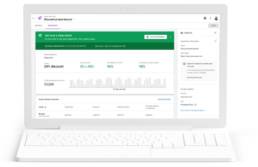
How does it work?
Through the data that are automatically registered on Google Analytics, all the analyzes necessary to evaluate the proper functioning and performance of the site are carried out. this makes it easy for users to go and see everything that could be improved. But the real magic starts now!
Once you understand the problems or weaknesses of a site, Google gives you the opportunity to do tests to understand how to best correct them.
The types of tests offered are the following.
A/B(/n) test
This test consists of an experiment in which multiple variations of the same page are proposed to users at random. The variant A is the original one, while from B onwards modified elements are inserted. The types of changes can be the most disparate, you can go from the variation of a button (for example a call to action) to a completely different web page. All variants are published almost simultaneously so that the test cannot be influenced by external elements.
Redirecting test
It is also known as the split URL test and has the same function as the A / B test mentioned above but, instead of making changes to the graphical interface of a single site, it allows you to compare multiple web pages with each other. This test is helpful when evaluating the hypothesis of redesigning a page or testing which of two different landing pages works best.
Multivariate test
Through this type of test, multiple variants of multiple sections of the page can be tested in order to understand with which combination a better result can be obtained. The alternatives of several sections can then be tried at the same time. The result will be the perfect combo for all the elements on the web page.
These tests can be used to achieve different goals, here are some of them:
Optimizing a page
To improve the information contained on the web page, which can be that of the home page, the description of the products, the contact form.
Optimization of elements
To make the browsing experience within the site more pleasant and functional, the feasibility of the forms (registration or contact), make it easy to understand buttons and dialog boxes, highlight all the elements of trust (information on privacy, site reliability, testimonial).
General optimizations
It could be the length or clarity of the texts, the exemplification and number of images, the colors and layout of the page.
How to get started with Google Optimize?

To access the Google Optimize features you need to use the Chrome browser and have a Google account. You must then add a snippet on the site for monitoring and have access to the Google Analytics account integrated on the site.
The most interesting thing is that in the testing phase there is the possibility of using an online tool that allows, through a visual composer, to hide parts of the site, modify texts or its appearance, without necessarily changing the project code.
This feature is therefore also suitable for those who do not have programming skills but want to try an alternative version of a page of the site.
Other similar tools
Many other tools can also be found online that perform the same functions. However, many of these are paid.
Among the most used we find Statcounter which allows you to track and analyze the most important metrics of paid traffic. it is also possible to activate the option to have daily, weekly or monthly reports sent directly to your personal mail from the program. Gauges is also a widely used analytics tool to track the most important traffic metrics in real time.
Then there are tools that allow you to make analyzes that respect the privacy of users more but that return less detailed results. Some of these are Simple Analytics or Fathom Analytics which offer the possibility to see for example the number of visitors, their origin and the most visited pages and their time spent.
On the web there are other nice tools that can help analyze and monitor the effectiveness of a site. One of them is CrazyEgg. It is a tool that works through heat maps. Through its functions it is possible to go and see the areas of greatest interest to users.
The most used tools are the heatmap and the scroll. Through the heatmap you can see which are the most clicked areas within the site. The buttons that generate the most interest are highlighted in red (as the clicks are lowered, the color that takes on shades of yellow, green and finally blue also changes). The scroll, on the other hand, allows you to check where visitors spend more time on a page. You can then see the part of a page that users turn their attention to and what content they scroll quickly.
A tool that could be defined as complete, which brings together all the features of Google Optimize and CrazyEgg is Hotjar. It is a visual analytic in which users’ actions (their clicks, taps, scrolls, mouse movements, where they pause, what information skips) can be analyzed through the heatmaps. it is also possible to go and see which step of the conversion funnel are abandoned most often. It is also possible to carry out A / B tests, administer questionnaires and surveys in order to ensure users a pleasant customer journey and increase conversions.
Related post

Mobile marketing: what it is and why it’s strategic
Discover why mobile marketing has become the heart of digital strategies. In…

The difference between B2B and B2C E-commerce: two worlds, two strategies
B2B and B2C are two fundamentally different e-commerce models in terms of…

App Monetisation: effective strategies for turning a project into a sustainable business
Finding out how to monetise an app is essential to turning it into a…